
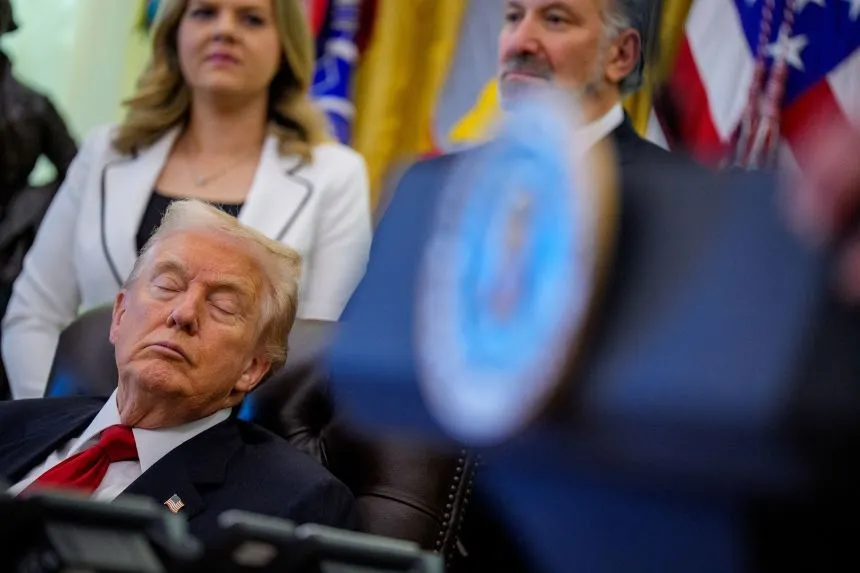
Trump’s Governance Crisis
Paul Krugman argues that Donald Trump has moved away from governing and is now focused mainly on anger, revenge and maintaining political power. In his Substack article, Krugman connects this shift to what he describes as the political damage caused by the Iran war and Trump’s declining interest in effective government. The article presents Trump’s current behavior as a warning sign for U.S. institutions and democratic stability.
The Appointment of Bill Pulte
A central point in the article is Trump’s decision to appoint Bill Pulte as acting Director of National Intelligence. Krugman criticizes the appointment because the DNI position is central to national security, while Pulte’s background is in housing finance rather than intelligence or defense. The article argues that using an “acting” appointment allows Trump to avoid a more difficult confirmation process and place a loyal figure in a sensitive position.
Loyalty Over Expertise
Krugman presents Pulte as an example of how loyalty has become more important than institutional competence. He argues that Pulte’s role in the Trump administration has been linked to targeting political opponents through accusations of mortgage fraud and other legal pressure. From this perspective, the appointment is not only about one person’s qualifications, but about a broader pattern of politicizing government agencies.
Democratic Institutions Under Pressure
The article also connects Trump’s behavior to broader concerns about U.S. democracy. Krugman warns that threats to democratic institutions continue through election rules, politicized government structures and efforts associated with Project 2025. Although the article is strongly critical and opinion-based, its relevance lies in how it reflects ongoing debates about executive power, institutional independence and democratic backsliding in the United States.
International Relevance
Overall, Krugman’s analysis matters internationally because U.S. domestic politics has consequences beyond the country’s borders. Decisions affecting intelligence, democratic institutions and foreign policy can influence national security, alliances and global perceptions of American governance. For this reason, the article can be read as part of a wider discussion about how political polarization in the United States affects international stability and democratic credibility.
Reference: Krugman, P. (2026, June 3). Trump has given up. Paul Krugman Substack. https://paulkrugman.substack.com/p/trump-has-given-up