
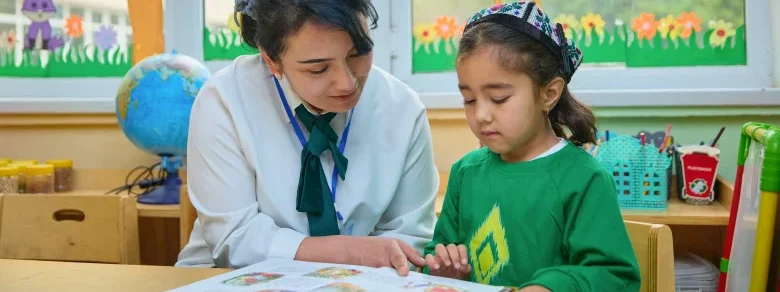
Preschool enrollment has nearly tripled in less than a decade.
Uzbekistan has achieved one of the fastest expansions of early childhood education in the world. In 2017, only 27% of children aged 3 to 7 were enrolled in preschool. By 2025, that figure had risen to 75%, largely through the implementation of the Promoting Early Childhood Development Project. Supported by the World Bank, the International Development Association (IDA), the Global Partnership for Education (GPE), and the Early Learning Partnership, the initiative has transformed access to preschool education nationwide.
Thousands of new preschools are expanding access to learning.
A major component of the reform has been the rapid growth of educational infrastructure. Since 2017, the number of preschool institutions has increased significantly, reaching approximately 7,000 public preschools across the country. As a result, more than 1.4 million children now participate in early childhood education programs. These investments have improved school readiness and created opportunities for children to develop cognitive, social, and emotional skills before entering primary education.
Innovative services are reaching vulnerable and remote communities.
Beyond expanding enrollment, Uzbekistan has introduced targeted initiatives for children facing additional barriers to learning. Early Learning Hubs established in the Namangan and Samarkand regions provide free playgroups, speech therapy, psychological support, and family guidance services. Between 2019 and 2025, these centers served approximately 4,700 children, including more than 200 with developmental delays. Meanwhile, mobile kindergartens known as Aqlvoy buses bring preschool education directly to remote communities lacking permanent facilities.
Preschool access is improving opportunities for mothers and families.
The expansion of preschool education has generated benefits that extend beyond children’s learning outcomes. World Bank analysis indicates that the tripling of preschool facilities between 2018 and 2022 contributed to an average 12% increase in women’s labor force participation. Affordable childcare has enabled many mothers to pursue employment, continue their education, or return to work. At the same time, the growth of the preschool sector has created new jobs, demonstrating how investments in early childhood education can support both social and economic development.
Reference
World Bank Group. (2026, June 9). Uzbekistan’s Preschool Boom: Better Futures for Children and Mothers. World Bank Group. https://www.worldbank.org/en/news/feature/2026/06/09/uzbekistan-s-preschool-boom-better-futures-for-children-and-mothers