
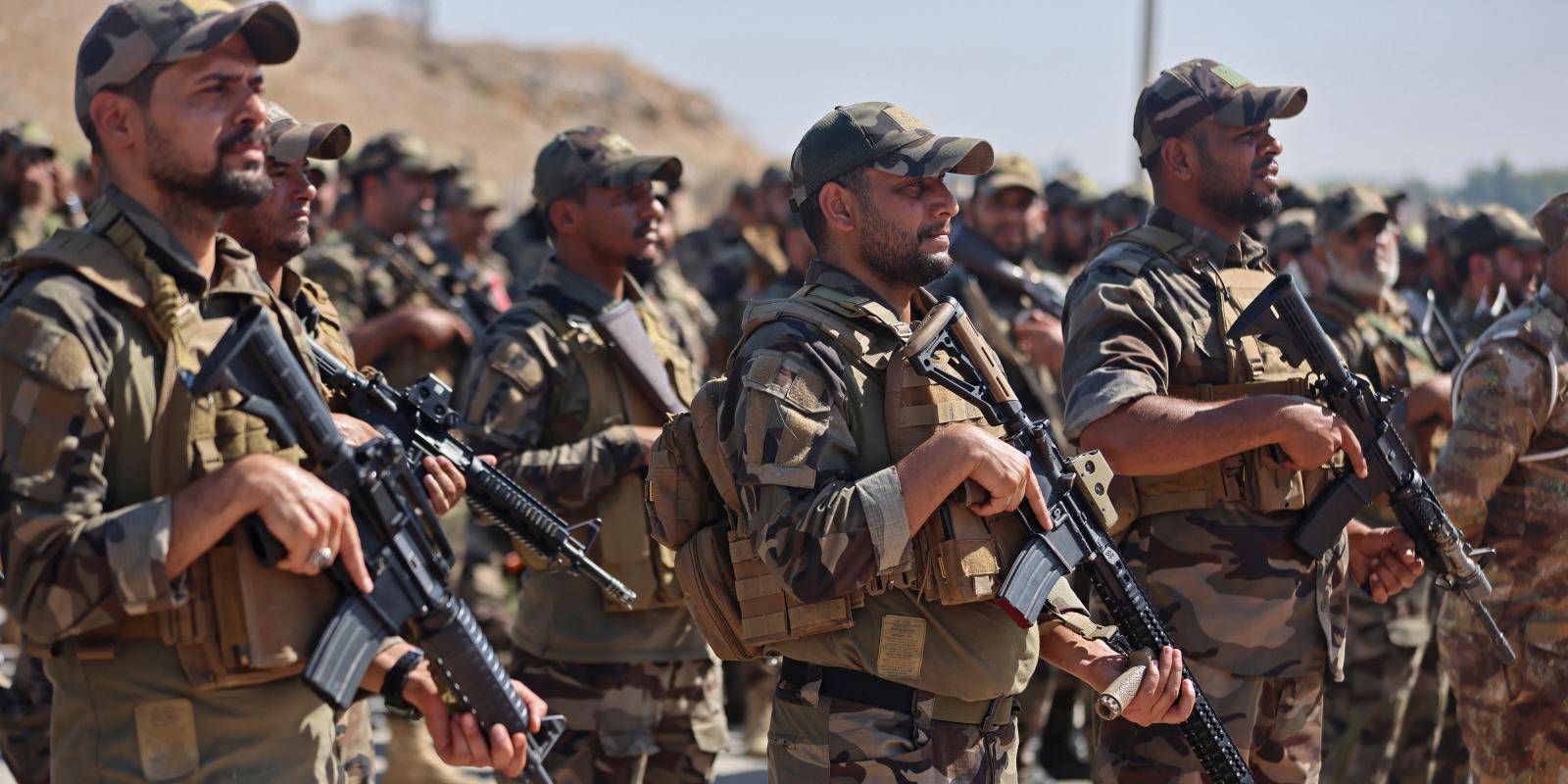
For years, Iraqi governments have struggled with the same dilemma: how to assert authority over armed groups that operate beyond the state’s direct control. The challenge has gained renewed urgency under Prime Minister Ali al-Zaidi, whose administration faces growing pressure to prevent Iraq from being drawn deeper into regional conflicts. As tensions linked to the war with Iran reshape the Middle East, the question is whether this moment offers a genuine opportunity for reform or simply another cycle of promises that will prove difficult to fulfill.
Recent developments suggest that some of Iraq’s most influential armed factions may be reconsidering their position. Leaders who once emphasized resistance have expressed support for integrating their forces into state institutions. This shift reflects changing political calculations. Years of relative stability allowed several militia leaders to gain parliamentary influence, government positions, and economic opportunities. For many, participation in the political system became more beneficial than permanent confrontation.
Yet this apparent opening remains limited. Not all factions share the same interests. Groups more closely tied to Iran’s regional agenda have shown little willingness to subordinate themselves to Baghdad. Some continue to insist that armed resistance remains central to their mission regardless of government policy. Their stance exposes a fundamental obstacle: the factions most invested in Iraq’s political institutions are generally the most open to integration, while those with stronger external loyalties have fewer incentives to relinquish autonomy.
The regional environment has further complicated the situation. Iraq has attempted to avoid becoming a battleground in broader confrontations involving Iran, Israel, and the United States. However, armed groups operating within its borders have reduced the government’s ability to remain neutral. Attacks claimed by Iran-aligned militias and retaliatory military actions have demonstrated how easily Iraqi territory can become entangled in conflicts that originate beyond its borders.
External pressure has added another layer to the debate. Washington has demanded stronger action against Iran-backed groups and greater state control over weapons. Iraqi leaders are aware that failure to act could carry economic and diplomatic consequences. At the same time, confronting powerful militias presents serious risks. Recent violence targeting state officials illustrates how dangerous such efforts could become.
Even if integration moves forward, important questions remain unanswered. Iraq has experienced similar processes before, yet formal incorporation did not necessarily transfer loyalty from armed organizations to the state. Power often continues to flow through informal networks, political alliances, and patronage systems. As a result, changing an institution’s structure does not automatically change where authority truly resides.
The deeper issue concerns control rather than symbolism. Integrating fighters into official institutions may alter administrative arrangements, but meaningful reform requires transferring decision-making power and military capabilities to the state. Without addressing these underlying relationships, integration risks becoming a bureaucratic exercise that leaves existing power structures largely intact.
A rare convergence of factors has created conditions that appear more favorable than in previous years. Regional instability, pressure from international partners, and growing concern among Iraqi political elites have generated momentum for change. Nevertheless, Iraq’s recent history offers a cautionary lesson. Reform efforts often begin with optimism before encountering the realities of a fragmented political system. Whether the current moment becomes a turning point or another missed opportunity will depend on the government’s ability to confront obstacles that have long outlasted ambitious promises.
Reference: Mansour, R. (2026, June 9). Can Iraq’s new prime minister finally rein in its armed factions? Chatham House. https://www.chathamhouse.org/2026/06/can-iraqs-new-prime-minister-finally-rein-its-armed-factions