
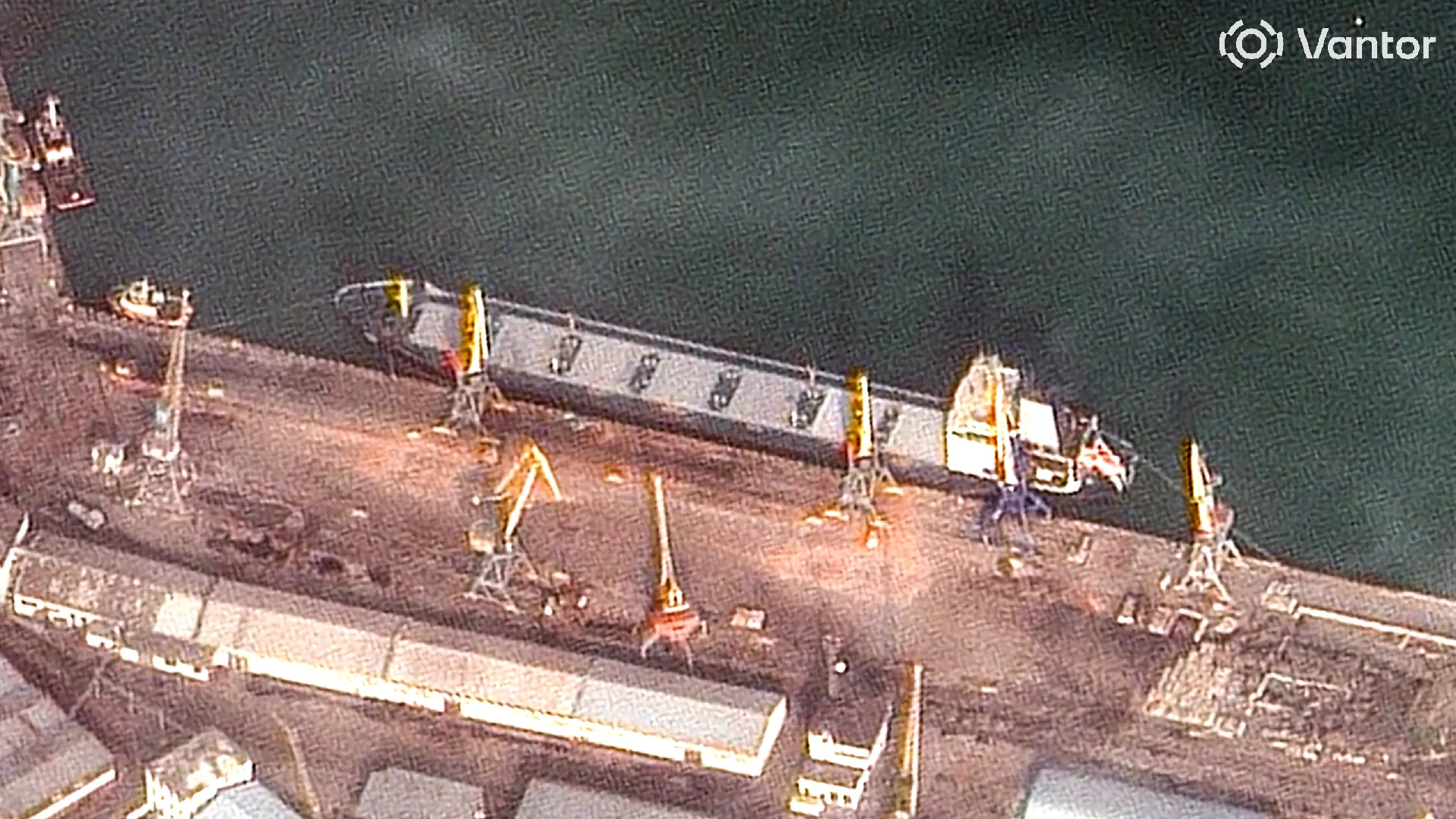
An investigation into the Russian bulk carrier Grumant has revealed a sophisticated journey. To deliver stolen Ukrainian grain to Libya, highlighting a new expansion of Russia’s “shadow grain fleet.” The vessel was identified loading grain at the occupied port of Feodosia in Crimea in early February 2026. After a two-month transit, the ship arrived at the Port of Benghazi, Libya, on April 18, where it successfully unloaded its cargo.
The identification of the ship’s location was made possible by bypassing common GPS spoofing in the Black Sea. While standard location data was erratic and unreliable due to electronic interference. Investigators analyzed the ship’s transmitted heading data. Because heading data is pulled from an onboard compass rather than a satellite, it remained accurate. The ship’s constant heading of 267 degrees perfectly matched the alignment of the specific berth in Feodosia. This digital evidence was corroborated by high-resolution satellite imagery. Showing the ship’s unique grey decking, seven cargo hatches, and distinct yellow mast at both the Crimean loading site and the Libyan destination.
The Grumant’s voyage included nearly a month of loitering off the Turkish coast near Izmir. Though it never docked there, suggesting it may have been turned away before continuing to Libya. In addition, the delivery took place in a region of Libya controlled by the Libyan National Army (LNA). An administration with known ties to Russia. While Libya remains politically divided, the opaque nature of its port operations has allowed for the entry of controversial Russian shipments. Obviously, often regardless of the local administration’s official stance on the conflict in Ukraine.
Ukrainian authorities have declared all such exports from occupied territories illegal. Characterizing the activity as a strategic effort by Russia to monetize stolen resources and circumvent international sanctions. In response, Ukraine is pursuing more aggressive legal actions against the shadow fleet. This includes working with international partners to secure the detention and confiscation of these vessels. Following a recent legal precedent in Sweden where a similar grain-carrying ship was seized and handed over to Ukrainian officials for investigation.
In conclusion, this case demonstrates how illicit shipping networks are continually evolving to evade international scrutiny. Through deceptive maritime practices and electronic spoofing. The successful tracking of the Grumant underscores that parsing specialized data points like compass headings can effectively defeat GPS manipulation. Providing vital evidence for nations looking to enforce sanctions. Ultimately, as Ukraine shifts its strategy toward the physical detention and confiscation of these vessels in international jurisdictions. The international community faces growing pressure to close maritime loopholes. Therefore, restrict the expanding global markets for stolen goods.
Reference
Team, B. I. (2026, June 12). Heading Off: New Technique Helps Track Grain Smuggling Expansion to Libya – bellingcat. Bellingcat. https://www.bellingcat.com/news/2026/06/12/shadow-fleet-russian-grain-stolen-ukraine-libya-ais-technique-grumant/