
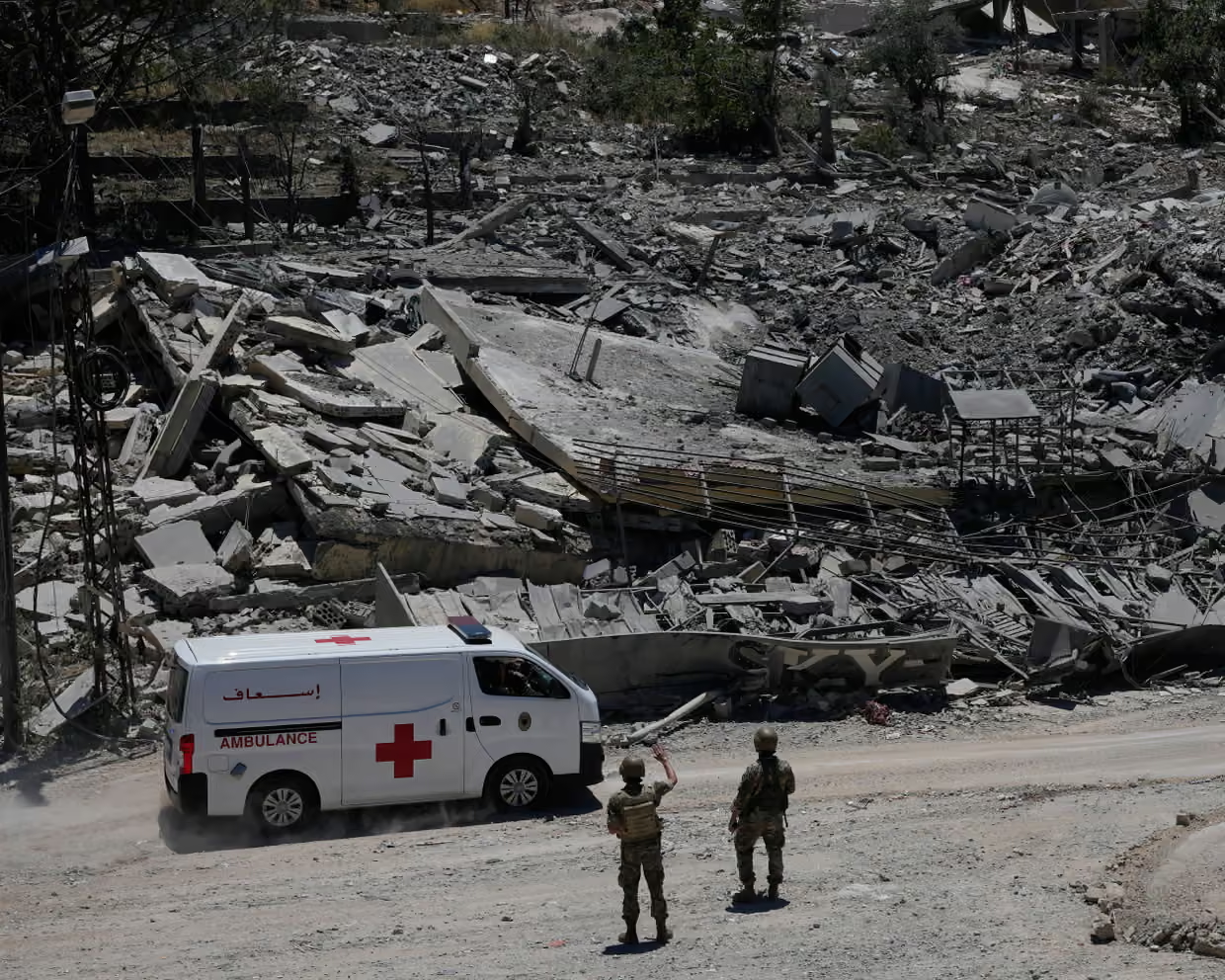
The conflict between Israel and Hezbollah has entered a new phase of escalation, further undermining hopes for a sustainable ceasefire in southern Lebanon. Israeli forces launched a new wave of airstrikes after issuing evacuation orders for nine villages, including areas that had become temporary shelters for people displaced by months and months of fighting. The attacks forced hundreds of families to flee once again, highlighting the growing humanitarian toll of a conflict that continues to spread uncertainty across the region.
The strikes occurred shortly after Hezbollah rejected a U.S.-backed ceasefire proposal that sought to reduce hostilities between Israel and Lebanon. The group insisted that any agreement must include a complete Israeli withdrawal from Lebanese territory, arguing that partial arrangements would fail to address the underlying causes of the conflict. This disagreement has complicated diplomatic efforts and reinforced the deadlock surrounding negotiations.
Military developments on the ground have contributed to rising tensions. Israel has expanded operations in southern Lebanon and strengthened its presence in areas it considers strategically important. Hezbollah, meanwhile, continues to frame its actions as resistance against Israeli advances and has signaled that it is unwilling to accept conditions it views as favoring Israel.
Furthermore, the consequences for civilians have become increasingly severe. Entire communities have faced repeated displacement, while many families remain uncertain about whether they will be able to return to their homes. Villages that had previously avoided large-scale destruction are now being drawn into the conflict, expanding the geographic scope of humanitarian suffering. The repeated cycle of evacuation, bombardment and displacement has deepened concerns about the long-term viability of everyday life in parts of southern Lebanon.
Lebanese political leaders have also expressed frustration with the broader regional dynamics surrounding the war. Officials have argued that Lebanon should not become a bargaining tool in disputes involving larger regional powers. This reflects the fear that domestic stability is being undermined by conflicts and rivalries that extend far beyond Lebanon’s borders. As negotiations involving Israel, Iran, the United States, and Hezbollah continue to overlap, the country remains caught between competing geopolitical interests.
The latest escalation illustrates the fragility of ceasefire efforts in a region where military operations and diplomatic negotiations often unfold simultaneously. Although international mediators continue searching for a path toward de-escalation, the gap between the demands of the parties involved remains substantial. As long as questions regarding territorial control, security guarantees and political influence remain unresolved, the prospects for lasting peace appear uncertain. In the meantime, civilians continue to bear the greatest burden of a conflict that shows few signs of ending.
Reference: Burke, J. (2026, June 5). Israel strikes southern Lebanon after ordering evacuations of nine villages. The Guardian. https://www.theguardian.com/world/2026/jun/05/israel-strikes-southern-lebanon-evacuations-nine-villages